Physical Address
304 North Cardinal St.
Dorchester Center, MA 02124
Physical Address
304 North Cardinal St.
Dorchester Center, MA 02124
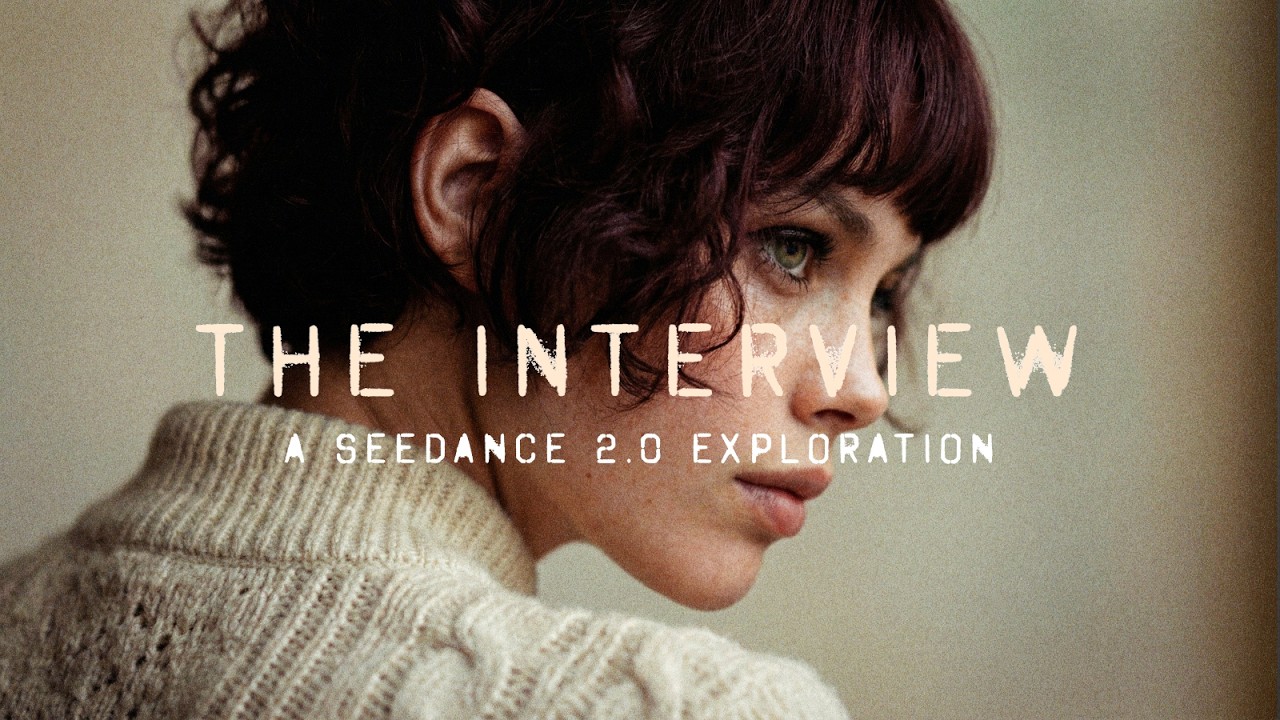
“The Interview” looks absolutely gorgeous, and the visual generation is incredibly sharp. The lighting hits the protagonist’s face perfectly, capturing those tiny, subtle shifts in expression that really ground an intimate, close-up scene. It’s a clean, incredibly stable render with fantastic texture work—thankfully missing that weird warping that can completely pull you out of the moment. This is exactly where tools like ByteDance’s Seedance 2.0 shine; its multimodal reference system seems to lock in facial consistency and texture details across frames much better than older models, avoiding that annoying stylistic drift.
The entire piece hinges on a quiet, confessional monologue, and the simulated performance definitely carries a weary, relatable sadness. The micro-expressions sync up beautifully with the voice track, catching those little human beats of hesitation. The lip-sync is impressive, another area where Seedance 2.0’s native audio generation really pushes the envelope, tightly syncing the generated speech and ambient sound directly with the visual output. It holds your attention effortlessly, even if the emotional delivery occasionally feels just a touch too uniform when you’re waiting for a truly raw, devastating punch.
Where it struggles a bit is on the page. The dialogue leans pretty hard into familiar tropes—staring into mirrors, conforming to society, and losing your identity. The script teases a bigger, maybe dystopian world with talk of “breaking the rules,” but it stays too vague to build any real tension or stakes. While AI can flawlessly execute complex camera prompts—like a slow dolly-in or a subtle focus pull—it can’t write the subtext or the messy, contradictory human impulses that make a script genuinely great. It ends up feeling more like an abstract mood board than a tight, gripping character arc.
At the end of the day, it’s a slick, beautifully generated mood piece that proves just how locked-in digital filmmaking pipelines are getting. The framing is steady, the assets are lifelike, and the atmosphere is heavy and undeniable. It just leaves you wishing the actual storytelling had the exact same bite and precision as the visuals. We are at a point where the tech can perfectly render the teardrop, but we still need better writers to tell us why the character is crying.